Source Automatic High Pressure Water Pump for Irrigation, Mining, and District Energy
Explore 30 listings of automatic high pressure water pump options featuring vertical and horizontal shafts, cast iron or stainless steel casings, and capacities up to 300 L/min. Buyers can compare motor types, pressure ratings, and customization support from verified Chinese manufacturers.
Key considerations
Products List



Comprehensive Sourcing Guide
Strategic Sourcing Guide for Automatic High Pressure Water Pumps
Navigating the global market for automatic high pressure water pumps requires a disciplined approach that separates marketing assertions from verifiable technical realities. Buyers in the automotive, district energy, and drinking water sectors must prioritize precision in specification matching, as the term "high pressure" often overlaps with varying operational definitions across different pump architectures. The following guide outlines the critical evaluation criteria for sourcing these industrial assets, ensuring that procurement decisions are grounded in observable product attributes and established industry standards rather than unverified claims.
Technical Specification Analysis and Operational Parameters
The foundation of a successful procurement strategy lies in a granular understanding of the pump's mechanical and hydraulic specifications. In the current market, products labeled as high pressure pumps exhibit a wide variance in performance metrics. Buyers must verify the maximum head, which serves as the primary indicator of pressure capability. Observed market data indicates that units classified under this category may offer maximum heads ranging from 10-30 meters to significantly higher ranges of 80-110 meters. This discrepancy necessitates a clear definition of the required pressure profile before initiating a supplier search. A pump designed for a 30-meter head will fail in an application requiring 100 meters, regardless of other similarities.
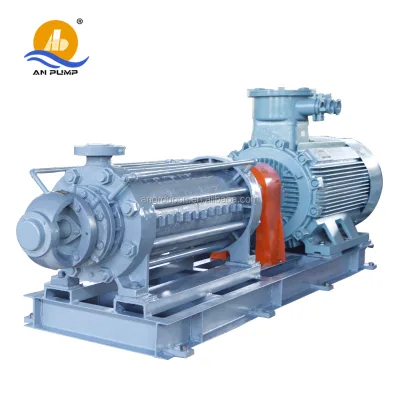
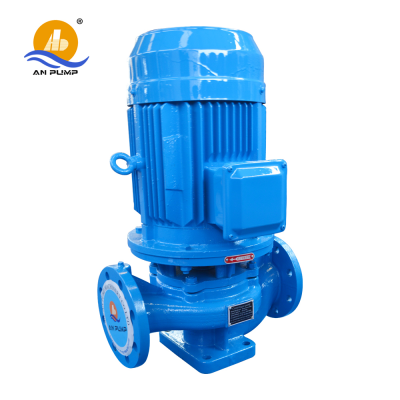
The configuration of the pump shaft and casing is equally critical for system integration. The market presents both vertical and horizontal pump shaft positions, alongside distinct casing designs such as horizontal split pumps and vertical joint surface pumps. The choice between these configurations depends heavily on the installation footprint and maintenance accessibility requirements of the facility. Furthermore, the impeller design dictates the fluid dynamics and efficiency. Semi-open impellers are commonly observed in specific industrial applications, while single-suction configurations are standard for single-stage pumps. Buyers must confirm whether the impeller is single-stage or multi-stage, as this directly influences the pressure generation mechanism.
Power source and driving type are the next essential verification points. While some units utilize AC motors with capacitor-start-and-run single-phase asynchronous technology, others may rely on diesel engines or two-stroke configurations with specific displacement ratings, such as 52cc. The starting mode and speed characteristics, often categorized as high speed, must align with the available power infrastructure and the desired flow rate. Capacity constraints are also vital; observed data suggests a capacity range of 200-300 liters per minute for certain models, which may be insufficient for larger district energy applications. The maximum suction lift, typically observed between 7-9 meters, further limits the operational envelope of the pump relative to the water source elevation.
Compliance, Certification, and Material Standards
Verifying compliance and material integrity is a non-negotiable step in the procurement of high-pressure equipment. The market features a mix of standard and non-standard products, with "Standard" being the prevalent classification for reliable units. Material selection directly impacts durability and corrosion resistance. Commonly observed materials include cast iron, stainless steel, and cast steel. The choice of material should be dictated by the fluid being pumped; for instance, applications involving clarified water or sewage may require stainless steel to prevent degradation, whereas general water transfer might suffice with cast iron.
Certification status provides a layer of assurance regarding manufacturing quality and safety. While specific certification bodies vary, buyers should look for evidence of ISO 9001 and CE marking. These certifications indicate that the manufacturing process adheres to international quality management systems and safety standards, respectively. However, buyers must exercise caution and request valid, current certificates rather than accepting generic claims. The presence of ISO 14001:2015, which relates to environmental management, is another potential indicator of a supplier's commitment to sustainable practices, though its relevance depends on the specific regulatory environment of the buyer's region.
Product standards also extend to the dimensional and structural specifications. Observed standard sizes for certain components include a range of 2/2.5/3/4/5/6/8/10/12/14/16/20, likely referring to flange sizes or connection diameters. Ensuring that the pump's inlet and outlet dimensions match the existing piping infrastructure is essential to avoid costly retrofits. Additionally, the operating pressure must be confirmed as compatible with the system's design limits. Some units are rated for atmospheric pressure operation, while others are engineered for low-pressure or high-pressure regimes. Misalignment in these parameters can lead to catastrophic system failure.
Cost Drivers and Economic Considerations
Understanding the cost structure of automatic high-pressure water pumps is essential for budgeting and total cost of ownership (TCO) analysis. The price range in the market is extensive, spanning from $0.10 to $12,000 USD. This vast disparity is driven by factors such as material quality, power source complexity, pressure rating, and the level of customization offered. A unit priced at the lower end of the spectrum may utilize basic cast iron components and a simple motor, whereas a high-end unit might feature stainless steel construction, advanced automation, and a high-efficiency diesel engine.
Minimum Order Quantity (MOQ) is another significant economic factor. Market observations show MOQs ranging from 2 pieces to 5,000 pieces. For small-scale projects or pilot programs, suppliers with low MOQs, such as 2 pieces, are preferable to minimize capital expenditure. Conversely, large-scale infrastructure projects may benefit from bulk purchasing, provided the supplier can guarantee consistent quality and timely delivery. Customization is a key cost driver; while many suppliers offer OEM, ODM, and OBM support, these services often incur additional costs and longer lead times. Buyers must weigh the benefits of a tailored solution against the premium price and potential delays.
Packaging and logistics also contribute to the overall cost. Products are typically shipped in wooden cases, cartons, or specialized export packing designed to comply with import regulations. The choice of packaging affects shipping costs and the risk of damage during transit. Buyers should verify that the packaging is robust enough to protect the pump from moisture and physical shock, especially for units made of cast steel or stainless steel which are susceptible to corrosion if not properly protected.
Typical Applications and Industry Alignment
Automatic high-pressure water pumps serve a diverse array of industries, each with unique operational demands. The automotive industry utilizes these pumps for cooling systems and testing rigs, where precision and reliability are paramount. District energy applications often require pumps capable of handling large volumes at high pressures to circulate water through heating and cooling networks. Drinking water systems demand pumps that maintain water quality, necessitating materials like stainless steel and certifications that ensure non-toxic performance.
Specific applications such as sewage pumping and clarified water handling require pumps designed to handle solids or specific fluid characteristics. The "Automatic Pump" functionality is particularly valuable in these scenarios, allowing for unattended operation and immediate response to pressure drops or flow interruptions. The working pressure classification, often noted as low pressure in some contexts but capable of high output in others, must be matched to the specific application requirements. For example, a pump with a maximum head of 80-110 meters is suitable for high-rise building water supply, while a unit with a 10-30 meter head is better suited for agricultural irrigation or low-pressure industrial cleaning.
Supplier Evaluation and Customization Capabilities
Evaluating suppliers requires a focus on their ability to meet specific technical and logistical needs. Buyers should prioritize suppliers that offer customization options, including OEM and ODM services. This flexibility allows for the adaptation of the pump to specific site conditions or process requirements. The origin of the product is also a factor; many units originate from China, with specific manufacturing hubs in Guangdong. While this region is known for its robust manufacturing ecosystem, buyers should verify the specific factory's quality control processes and track record.
Supplier reliability is often indicated by their response to inquiries, the clarity of their technical documentation, and their willingness to provide test results or performance data. A reputable supplier will clearly distinguish between standard and non-standard products and provide detailed specifications for each. They should also be transparent about their production capacity, lead times, and ability to scale production based on order volume. The presence of a clear warranty policy and after-sales support network is crucial for long-term operational continuity.
Quality Control and Long-Term Procurement Strategy
Implementing a robust quality control (QC) protocol is essential to mitigate the risks associated with sourcing industrial equipment. Buyers should insist on pre-shipment inspections that verify critical attributes such as material composition, dimensional accuracy, and pressure testing results. The use of standardized testing procedures ensures that the pump meets the specified performance criteria before it leaves the factory. For long-term procurement, establishing a framework for regular maintenance and spare parts availability is vital. This includes verifying the availability of replacement impellers, seals, and motor components.
The longevity of the pump depends on the quality of its construction and the appropriateness of its application. Selecting a pump with a robust casing, such as a horizontal split design, can facilitate easier maintenance and repair. Similarly, choosing a pump with a proven starting mode, like the capacitor-start-and-run single-phase asynchronous motor, can reduce the risk of electrical failures. Buyers should also consider the environmental impact of the pump, looking for energy-efficient models that minimize power consumption over its operational life.
Conclusion
Sourcing automatic high-pressure water pumps is a complex process that demands a meticulous approach to specification verification, compliance checking, and supplier evaluation. By focusing on the technical parameters such as maximum head, shaft position, and impeller design, buyers can ensure that the selected pump meets the rigorous demands of their specific application. The extensive range of prices, MOQs, and customization options available in the market offers flexibility, but it also requires careful analysis to avoid costly mismatches. Ultimately, a successful procurement strategy relies on a deep understanding of the product's capabilities, the supplier's reliability, and the long-term operational requirements of the facility.
FAQs
What is the maximum head range for these pumps?
The maximum head ranges from 10-30 meters to 80-110 meters depending on the specific model. Buyers must verify the required pressure profile before selecting a unit, as a pump designed for 30 meters will fail in applications needing 100 meters.
Which pump shaft positions are available in the market?
Both vertical and horizontal pump shaft positions are available for selection. The choice depends heavily on the installation footprint and maintenance accessibility requirements of the facility, with options including horizontal split pumps and vertical joint surface pumps.
Can I find pumps with stainless steel construction?
Yes, stainless steel is a commonly observed material for these pumps. This material is particularly suitable for applications involving clarified water or sewage to prevent degradation, whereas general water transfer might suffice with cast iron or cast steel.
What is the minimum order quantity for these units?
The minimum order quantity ranges from 2 pieces to 5,000 pieces across different suppliers. Small-scale projects may prefer suppliers with low MOQs like 2 pieces to minimize capital expenditure, while large projects may benefit from bulk purchasing.
How are these pumps typically packaged for export?
Products are typically shipped in wooden cases, cartons, or specialized export packing. The packaging is designed to comply with import regulations and protect the pump from moisture and physical shock during transit, especially for units made of cast steel.
Which certifications should I look for in a supplier?
Buyers should look for evidence of ISO 9001 and CE marking on the product. These certifications indicate that the manufacturing process adheres to international quality management systems and safety standards, ensuring reliability for industrial applications.
What power sources are used for these pumps?
Power sources include AC motors with capacitor-start-and-run single-phase asynchronous technology. Other units may rely on diesel engines or two-stroke configurations with specific displacement ratings like 52cc, depending on the operational requirements.